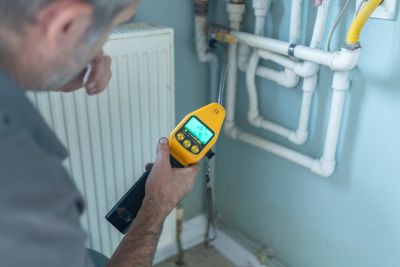
Certified Master Inspector® Lochard Bell finds hidden moisture and mold in mountain homes, and confirms the results with an accredited lab.
A musty smell in a cabin that sat closed all winter. A water stain under the eaves after the snow melted. A home you're about to buy that "just needs airing out." In the mountains, these are often the first signs of a mold problem, and most mold grows where you can't see it.
Highlander Inspections provides professional mold inspections and air quality assessments for homebuyers, sellers, homeowners and second-home owners in Big Bear Lake, Lake Arrowhead, Crestline, Running Springs and nearby communities in the San Bernardino Mountains.
The mountain air is dry most of the year, but mold in local homes usually has nothing to do with humidity. It comes from water getting where it shouldn't, and mountain homes have more ways for that to happen than most:
Snow melts on the roof, refreezes at the eaves, and pushes water under shingles and into attics and wall cavities.
One hard freeze in an empty cabin can soak insulation, subfloors and drywall long before anyone notices.
Vacation homes and rentals often sit with the heat low and no airflow, so small leaks go undetected.
Runoff from sloped lots collects around foundations and under homes, especially on shaded, north-facing lots.
Many homes built between the 1920s and 1970s have little vapor barrier, minimal attic ventilation and decades of patched repairs.
Poorly ventilated spa rooms and bathrooms create steady moisture indoors.
With 35+ years in the construction trades, Loch knows where water hides in mountain homes: behind the knotty pine paneling, under the deck ledger, around old skylights.
If customers can’t find it, it doesn’t exist. Clearly list and describe the services you offer. Also, be sure to showcase a premium service.
A moisture meter and infrared (thermal) camera help find damp areas behind walls, under floors and around windows, roofs and plumbing, without cutting into anything.
Indoor air samples are compared against an outdoor baseline sample. An independent lab analyzes them and reports spore types and counts, so you know whether indoor levels are elevated. Standard pricing includes: 1 outside air sample and 3 indoor samples (air or surface), additional samples are $80 each.
When suspected growth is visible, surface or swab samples identify what it is.
You get a report with photos, moisture readings, lab results and plain-language recommendations. It shows what was found, where, and what to do next. Lab results are typically available within 3 business days. View a sample report.
Price: $490 · Time on site: about 1 hour
Use your inspection contingency period to find mold before closing, when you can still negotiate repairs or credits.
A pre-listing mold inspection reduces surprises in escrow and shows buyers you have nothing to hide.
Check your property after a hard winter, a burst pipe or a long vacancy.
Musty odors, recent leaks, or allergy-like symptoms that get better when you leave the house are all good reasons to test.
Clearance testing confirms the mold work actually solved the problem.
Buying in the mountains? Our Homebuyers Package (Starting at $1,295, about 5 hours) combines a full General Home Inspection, a Mold Inspection & Air Quality Assessment and a Sewer Scope. That's everything most mountain buyers need, in one visit, for less than booking each separately.
We provide mold inspections throughout the San Bernardino Mountains, including:
Big Bear Lake · Big Bear City · Sugarloaf · Fawnskin · Lake Arrowhead · Crestline · Running Springs · Arrowbear · Green Valley Lake · Twin Peaks · Blue Jay · Skyforest · Cedar Glen · Rim Forest · Cedar Pines Park · Valley of Enchantment · Angelus Oaks · Forest Falls
A mold inspection and air quality assessment from Highlander Inspections is $490 and takes about an hour on site. It's also included in the $1,295 Homebuyers Package with a full home inspection and sewer scope.
No. A general home inspection notes visible signs of water damage or possible mold, but it doesn't include air sampling or lab analysis. If you want to know whether mold is present and at what levels, you need a dedicated mold inspection.
Yes. Mold often grows inside walls, under flooring, in attics and in crawl spaces. That's why we use moisture meters, thermal imaging and air sampling instead of relying on a visual check alone.
Mountain mold usually comes from water intrusion: snowmelt, ice dams, frozen pipes and runoff, not humidity. Homes that sit empty for long stretches are especially at risk because leaks go unnoticed.
The on-site inspection takes about an hour. Air and surface samples go to an independent lab, and results are typically ready within 2 to 4 business days. We'll walk you through what the numbers mean.
It's not required, but you're welcome to attend. For the most accurate air samples, keep windows and doors closed for about 12 hours beforehand if possible.
Your report explains where the mold appears, and the likely moisture source. We recommend fixing the water problem first, then hiring a qualified remediation contractor. Follow-up testing can confirm the problem is resolved. Have more questions? See our home inspection FAQs or contact us.
Don't let hidden moisture turn a dream cabin into an expensive surprise. Book online in minutes, or call Lochard directly with questions.
This website uses cookies. By continuing to use this site, you accept our use of cookies.